“I feel for the energy.”
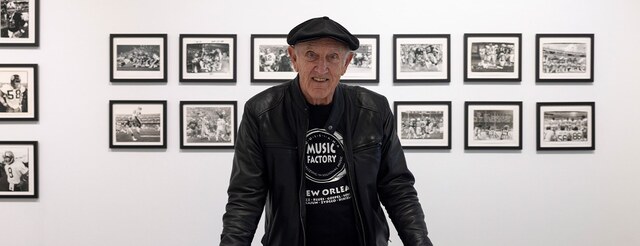
60 years of enduring the elements in pursuit of the perfect shot are etched in the lines on Michael Zagaris’s face. But the decades of travel have not worn down the legendary photographer. Usually framed by a baseball or flat cap, his eyes course with electric excitement. In fact, the 81-year old is always ready to regale friends—new and old—with stories of his experiences as the official team photographer for the San Francisco 49ers. While professional athletes are his typical subject, Zagaris admits he is, at heart, a photojournalist documenting the human condition. Sports just happens to be his chosen genre.
Zagaris has witnessed some of the most iconic moments in sports history. While he might not be a household name in Pittsburgh, it’s likely that many in the region—sports fans or not—have seen his work. From the time of Pittsburgh’s Iron Curtain to the heyday of the San Francisco 49ers to the controversial demonstrations of Colin Kaepernick, Zagaris has captured some of the most human moments in professional sports. Now, some of his iconic prints are on display at the Trust’s 707 Gallery until November 8, 2026.
As the guest of honor at the opening reception for the “60 Years of NFL Photography” exhibition, Zagaris explained that he wants to capture moments that defy stereotypical sports photos. Instead of only focusing on the action of the winning touchdown, Zagaris’ camera searches for the scenes of human connection—the moments of pain and disappointment and joy.
“I walk into a room,” he explained about his approach to craft, “and I feel for the energy.”
He generally does not choreograph photos. His job, as he sees it, is to capture the candid moment. His unique perspective has led to some intriguing works, like his collection of locker room photos documenting injuries and pain treatments—a routine part of pro sports that is often kept out of the public’s eye.
While he captures moments in time, Zagaris is also aware of the cultural shifts that underpin so much of his work. He argues that sports is a reflection of the larger American culture.
“When baseball was big,” he said, “it reflected the culture of that time.” The early 20th century, in Zagaris’s observation, was slower, more methodical, leisurely. Now, as football is ascendant, it reflects more of the cultural emphasis on glitz and glam, intensity, and faux violence.
Zagaris says that when he is taking a photo, he does not intend to capture those cultural symbols. Instead, he’s focused solely on the intensity and the emotions of the human in front of him.
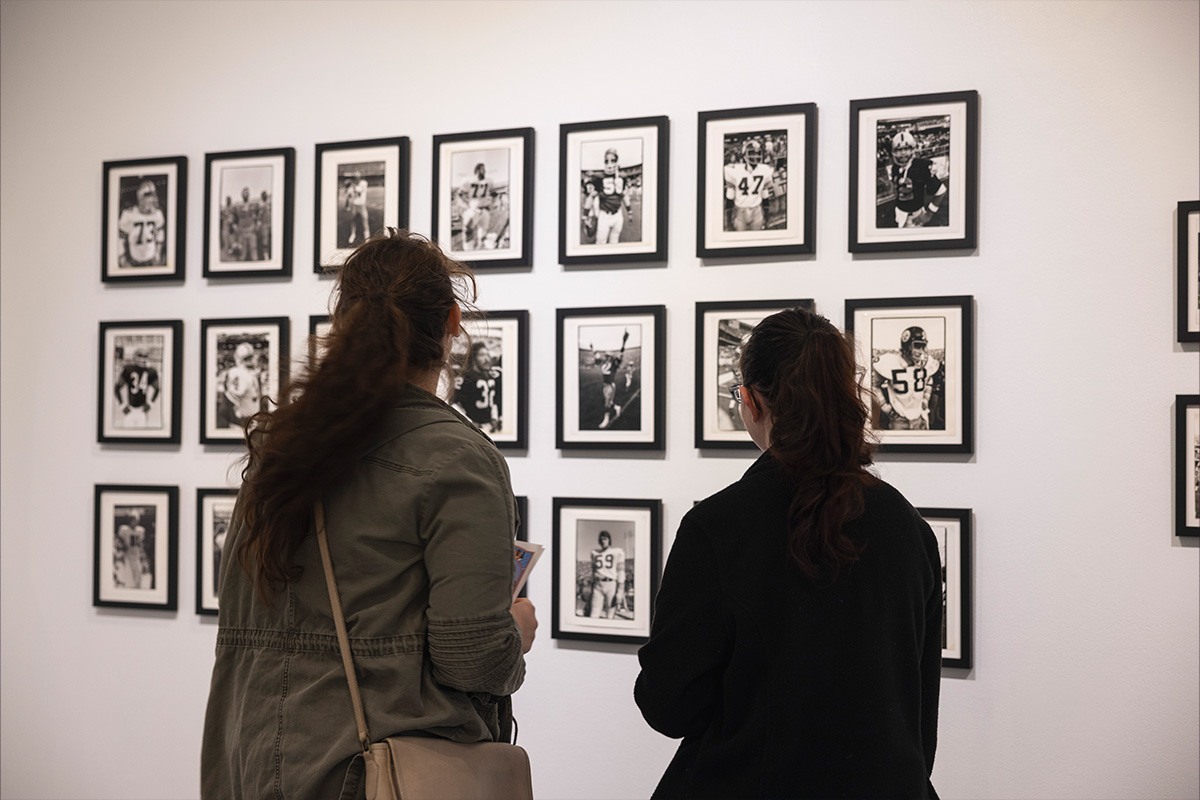
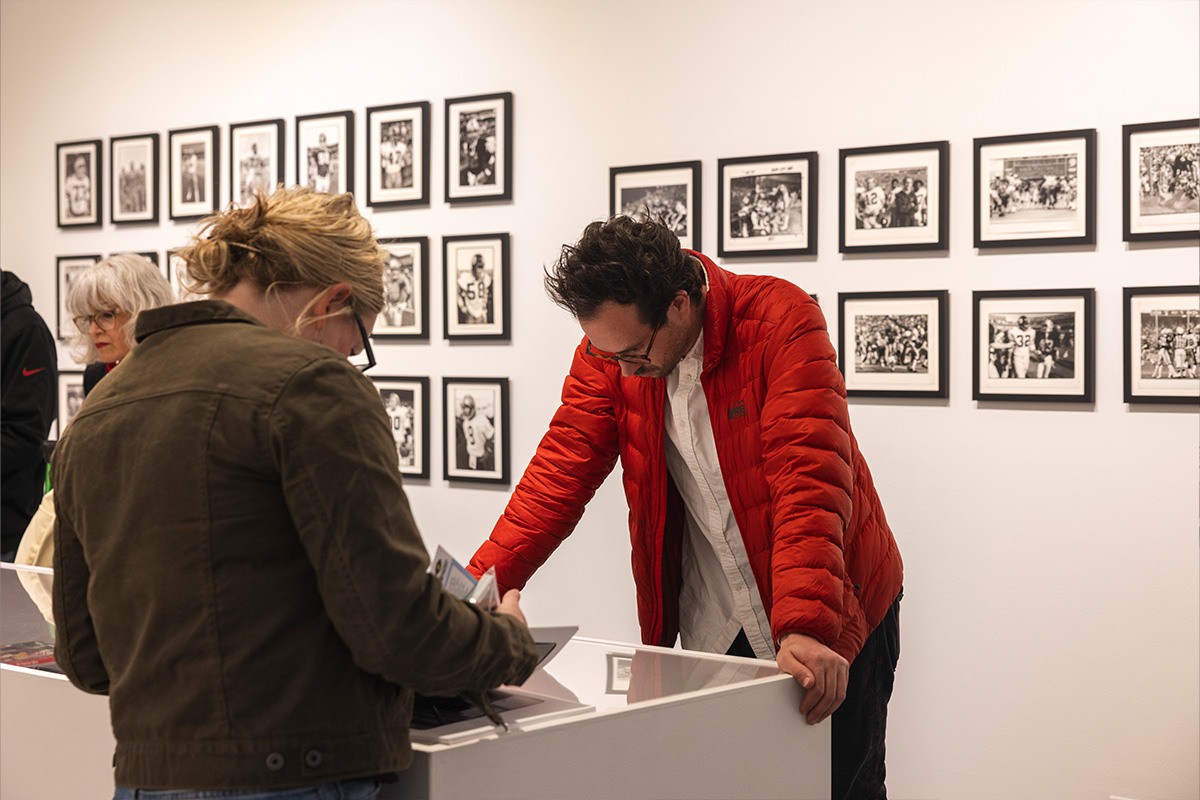
Yet the layout of the exhibition belies this neat and tidy intention. At 707 Gallery, his photos span from Joe Montana to Colin Kaepernick. While each photo stands on its own, displaying the players’ emotions, their integration with each other reflects the different ways that viewers can understand professional football. One way is to see professional sports as fundamentally connected to larger cultural movements.
When Sports and Culture Collide
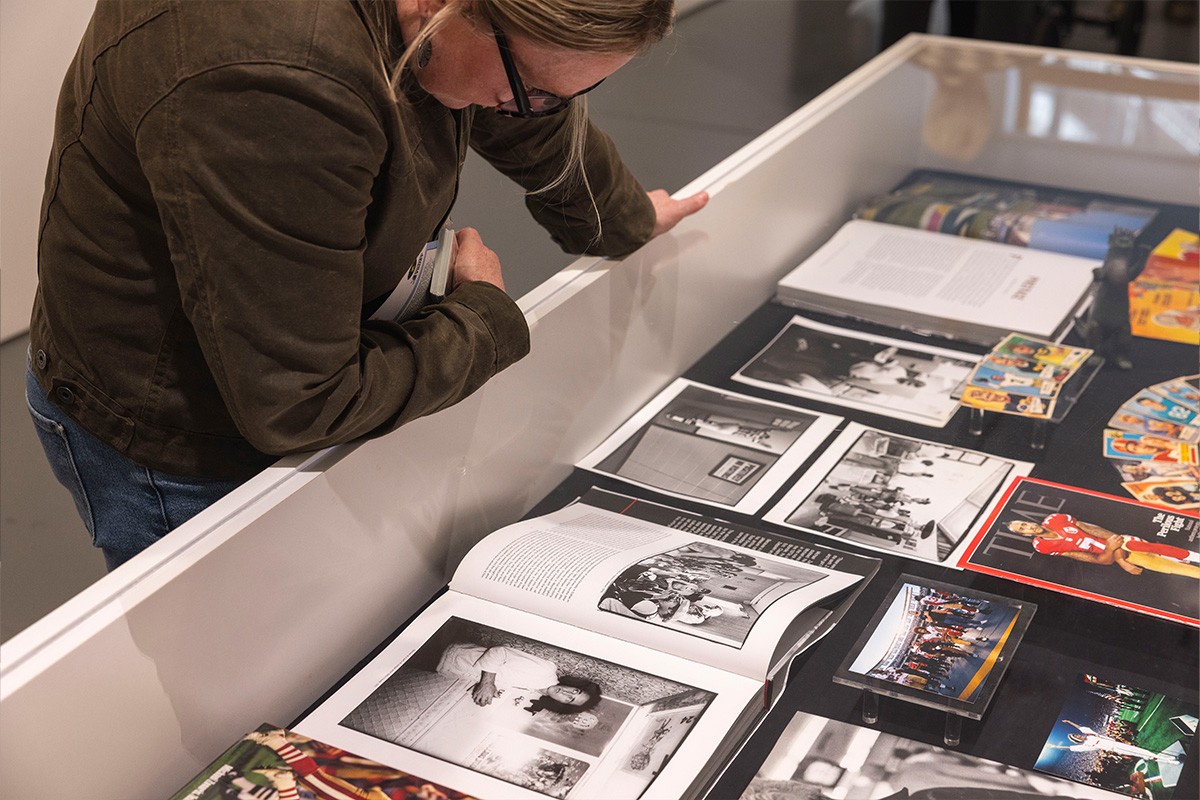
As a case in point, the center display table unifies the many disparate photos. The table includes Zagaris’ personal memorabilia, like the chin straps he collected from the field early in his career, his sports jersey, and his press badge. And some items in the case even show up in the photos, like the 49ers lucky talisman—a plastic dragon-like figurine, which appears in a series of behind-the-scenes locker room shots.
The table also contains two of the most poignant photos in the exhibition that happen to depict the intersection of sports and American culture. Zagaris was on-site at San Francisco’s Candlestick Park on November 27, 1978, when the 49ers were set to host the Pittsburgh Steelers. But early in the day, about 6 miles north of the stadium, Harvey Milk and George Moscone were assassinated. As Zagaris recounted, the NFL decided not to postpone their scheduled Monday Night Football Game. Zagaris chose to memorialize the irony of the situation in a photo, displaying the newspaper headline announcing the murders with the San Francisco stadium in the background.
Nearly 40 years later, Zagaris once again captured a pivotal moment in sports history. Before a game between the 49ers and the San Diego chargers, the quarterback Colin Kaepernick chose to kneel during the National Anthem. Zagaris knew this was a crucial moment as he snapped a photo. That moment spurred such a cultural movement that Zagaris’ photo is now housed at the Smithsonian’s National Museum of African American History and Culture.
These particular photos, as well as the photos depicting other sports legends on and off the field, show that singular moments of human interest also say something about American culture. Reflecting on how the glitz of professional sports intersects with cultural movements and everyday human experience, Zagaris pronounced what could be the subtitle of the exhibit: “Everything is connected,” he said.
“60 Years of NFL Photography” is at the 707 Gallery until November 8, 2026.